
Top 5 Factors When Selecting C&I Battery Energy Storage Systems (BESS)
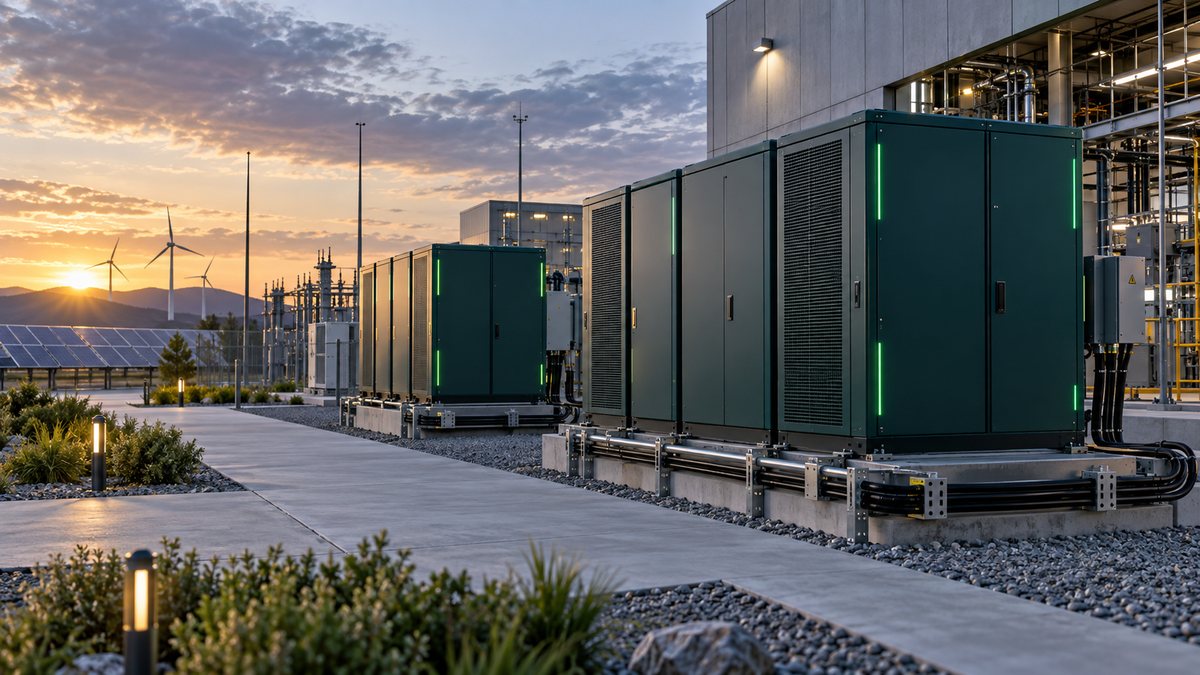
Commercial and industrial energy storage projects depend on a number of system and delivery factors beyond the cell itself. Project outcomes can be affected by how the system is specified against the project's objectives, whether the installation conditions match what the system was intended for, and whether a realistic service path has been agreed before handover. For EPC teams, installers, distributors and project buyers, the practical question is which complete system fits this project, this site, and this operating model.
The five factors below cover the areas that commonly influence whether a storage project moves smoothly from specification to operation. They are offered as a checklist for project discussions, not as a ranking.
Start With the Application, Not the Hardware
A storage system is a tool for a job. Before comparing suppliers, define the job in plain operational terms: what the system is expected to do, when it is expected to do it, and what happens on the site if it does not. A system sized and configured around a clear duty cycle behaves very differently from one that is retrofitted to a requirement discovered later.
Factor 1 — Application Fit and Duty Cycle Definition
Not all C&I storage applications place the same demands on a system. Common categories include peak-demand management, load shifting, solar self-consumption, backup or resilience support, and hybrid configurations where storage works alongside generation assets. Each of these implies a different pattern of charge and discharge, a different daily rhythm, and a different relationship with the site's existing electrical supply.
The practical work here is documentation, not shopping. Write down the load profile you are designing around, the operating window the customer expects, whether the site needs the system to operate in parallel with the grid or independently of it, and which operational outcomes the customer will actually measure. When these are agreed in writing, supplier responses become comparable. When they are not, proposals can be difficult to compare for reasons that are unrelated to hardware quality.
Factor 2 — System Safety and Risk Architecture
Safety in a storage system is architectural. It is not a single component or a label; it is the interaction between layers of protection and the way those layers are designed to behave when something goes wrong.
Layer by Layer: Cell, Module, Rack, Container
A well-structured system addresses safety at each physical level: the cell, the module or pack, the rack, and the enclosure that houses the system. Each layer has a role — containing an abnormal condition, detecting it, isolating it, or limiting how far it can propagate. For buyers, the useful exercise is to ask how the layers are described in the supplier's documentation, and whether that description is coherent from top to bottom.
Thermal Management and Fire-Safety Provisions
Storage systems generate heat, and thermal behaviour is a key variable in long-term operation. Ask how the system manages temperature under normal operation and what its strategy is when conditions move outside the expected range. Fire-safety provisions should be described in terms of detection, isolation, suppression approach and how emergency responders are expected to interact with the installation. Certification marks and specific ratings are project-specific topics; they belong in the technical qualification stage, not in an early comparison.
Factor 3 — Integration and Compatibility With Existing Infrastructure
Storage rarely arrives on a blank site. It arrives next to switchgear, transformers, existing generation, and an operations team that already has habits and tools.
Power Conversion and the Electrical Interface
The interface between the storage system and the site's electrical infrastructure determines how much additional engineering the project will require. Considerations include how the system connects, what protection and isolation arrangements are needed, and how the overall arrangement is coordinated with the existing installation. A system that is straightforward to integrate can reduce engineering hours, site work, and the risk of surprises during commissioning.
Controls, Communications and Site Monitoring
Ask how the system is monitored, what information it exposes, and how that information reaches the people who need it. Sites vary widely: some want the storage system integrated into a wider energy management or SCADA environment, while others want an independent, simple interface. Either arrangement can work, but only if the requirement is stated before the system is chosen.
Factor 4 — Installation Environment and Site Conditions
A storage system is a physical object in a physical place, and the site always has an opinion.
Footprint, Access and Logistics
Confirm the space available, how the equipment will reach that space, and what lifting, clearance and service access is required. Equipment transport, access routes and installation space can cause avoidable on-site delays. Planning this early is inexpensive; discovering it on delivery day is not.
Ambient Conditions and Environmental Protection
Temperature range, humidity, dust, salt exposure, altitude and the general environment all influence how a system should be specified and housed. Environmental protection levels are a specification detail to be matched against the actual site, not a number to be maximised for its own sake.
Factor 5 — Operations, Maintenance and Service Capability
The system will be in service for years. The support model is part of the product.
Monitoring, Diagnostics and Remote Support
Understand what the system reports, who receives that information, and how faults are communicated. Diagnostic speed can influence how quickly a fault is handled and how long a site is out of service.
Spare Parts, Response Paths and Long-Term Support
Ask how spare parts are handled, what the escalation path looks like, and who is accountable for support in the destination market. For international projects, this includes confirming the documentation language, the training available, and the route for technical questions after handover. Service capability is difficult to retrofit later, which is why it is worth raising at the selection stage.
Putting the Five Factors Together
A disciplined selection process uses the same five questions for every option: does the system fit the application, is its safety architecture coherent, will it integrate with the site, can it live in this environment, and can it be supported over its operating life? Suppliers that respond clearly and in writing to all five factors, in the project's own terms, should be considered for further technical evaluation.